ATEX Compliance and Certification
A product is said to be ATEX compliant if it has been proved safe to use in specific environments which contain explosive atmospheres. ATEX certification is awarded to equipment that has gone through rigorous testing outlined by EU Directive 2014/34/EU. The ATEX certificate stipulates which zone, or zones, the equipment is certified to be used in.
This page on Atex compliance and certification is an excerpt from the original
Atex Directive and Explosion Prevention webpage published on the
ControlAndInstrumentation.com website and is reproduced here with their permission.
What is ATEX Directive 2014/34/EU?
ATEX is the common name given to the EU directive 2014/34/EU, Equipment and Protective Systems Intended for use in Potentially Explosive Atmospheres.
The word ATEX is derived from the French "
ATmospheres
EXplosibles".
What is the intent of the ATEX Directive?
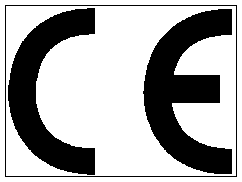
To enable the free trading of ATEX products within the European Economic Area by removing the need for separate documentation and testing for each individual European market. Manufacturers may use a single CE mark on their products to show ATEX compliance, and compliance with any other relevant EU Directive.
What Equipment does ATEX apply to?
The ATEX directive applies to both electrical and mechanical equipment intended for use in potentially explosive atmospheres. These include:
- equipment and protective systems for use within potentially explosive atmospheres;
- devices for use outside potentially explosive atmospheres, but which are required for, or contribute to the safe functioning of equipment and protective systems located inside such atmospheres; and
- components relating to the above.
To what industries does ATEX apply?
ATEX compliance is required for all equipment intended for use in any industrial location where there is a potential for an explosive atmosphere to exist, e.g. mines, factories, agricultural silos, refineries, oil and gas platforms, sewage treatment plants, and other chemical processing environments.
To whom does ATEX apply?
If you design, manufacture or sell any equipment or protective system intended for use in potentially explosive atmospheres within the EU, then your equipment will need to be compliant with the ATEX Directive 2014/34/EU, and have ATEX certification.
How do I know if a product is ATEX compliant?
The ATEX Directive sets a number of technical and quality objectives that must be complied with to the satisfaction of a notified body. Once these objectives have been met, the product will be ATEX compliant. An ATEX certificate will be provided by the equipment manufacturer, or supplier, stating compliance. The manufacturer can mark their product with a CE Mark to show compliance with ATEX, and all other relevant EU directives.
See
ControlAndInstrumentation.com page on
CE Marking for more information.
What other marking can be shown?
The following marking should be shown on all ATEX compliant equipment.
- CE Mark
- Ex-marking symbol followed by ATEX data
- Name and address of manufacturer
- Series or type, serial number
- Year of construction
- All further information essential to the safe use
Marking, especially on small components can be an issue.
Example of Atex Marking
 9876
9876  II 2 G
ATEX Marking Explained
The ATEX Directive identifies two groups of equipment.
- Group 1 equipment is intended for use in mining applications. Divided into categories M1 and M2. M1 identifies equipment that must continue to operate when a potentially explosive atmosphere is present. M2 identifies equipment that does not operate when a potentially explosive atmosphere is present.
- Group 2 is intended for all other situations. Divided into categories 1,2 and 3.
Category 1 equipment is intended for use in Zone O situations.
Category 2 equipment is intended for use in Zone 1 situations.
Category 3 equipment is intended for use in Zone 2 situations.
What are Atex Zones?
Zoned areas are areas where there is a risk of flammable material being released to atmosphere. The subscripts 0, 1 and 2 describe the probability of a flammable material being released to atmosphere in explosive concentrations. A full explanation of ATEX zones, and comparison with the North American system of hazardous area classification can be found on this
Hazardous Area Classification Explained page.
And the G?
G means the item has been tested for potentially explosive atmospheres due to the presence of gas.
D means the item has been tested for potentially explosive atmospheres due to the presence of dust.
Atex Compliant Mechanical Equipment
The ATEX directive also covers non-electrical equipment used in potentially explosive atmospheres. See BS EN 13463
For mechanical equipment, the zones are defined differently, e.g.
Zone 0 - safety with 2 faults
Zone 1 - safety under specified overload conditions
Zone 2 - safety in normal operation
Need to consider - Temp rise; sparks; material selection to avoid static charges; avoidance of frictional contact between certain alloys and steels; minimisation of leaks.
Return to Technical Toolbox index